Reliable China CO2 Condensing Units for Industrial Refrigeration
Why Choosing a Quality China CO2 Condensing Unit Matters
Having spent well over a decade working hands-on with industrial refrigeration, I can tell you that the rise of China CO2 condensing units in recent years has been pretty striking. Frankly, it feels like they’ve gone from being "just another option" to a solid contender in cold storage and processing applications. Oddly enough, CO2 — or R744, the natural refrigerant — has been gaining momentum due to environmental regulations and the push for sustainable refrigeration. And China is producing some impressive units that catch the eye of engineers and plant managers alike.
You might wonder: how do these units differ from the usual suspects? Well, Chinese manufacturers often offer tailored solutions, a variety of sizes, and competitive pricing. Over time, I’ve noticed several models come with well-engineered components — scroll compressors optimized for CO2, brazed plate heat exchangers, and reliable electronic controls. Yet, like anything industrial, it’s not all about specs on paper. It’s the build quality, after-sales support, and customization options that often tip the scales.
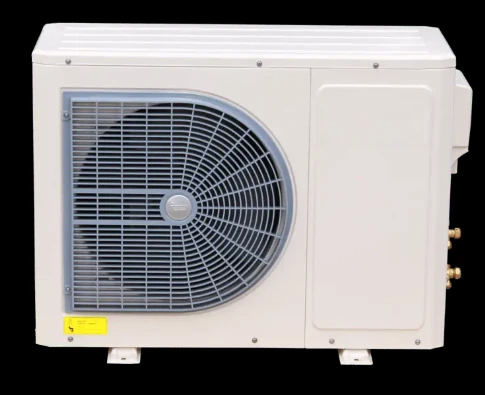
In terms of design, most units adopt a compact form factor to fit tight mechanical rooms or retrofit older systems. The steel frames tend to be robust — often powder-coated to resist corrosion. Refrigeration circuits in these Chinese units usually use stainless steel or copper for tubing, with modern brazing techniques to minimize leakage, which we all know can be the Achilles' heel in CO2 systems due to its high operating pressures.
Testing procedures, from what I’ve been told and seen during factory visits, include stringent pressure and leak tests. Some vendors even run real-world cycling to simulate months of operation — a critical step because CO2 systems operate around 60-90 bar, which is substantially higher than traditional HFC refrigerants.
Using these condensing units is surprisingly straightforward. The charge size tends to be small compared to ammonia systems, making handling safer. You often get integrated controls allowing smooth operation across varying ambient temperatures. One interesting note: these units fit nicely in food storage and transport sectors, where lowering carbon footprint is increasingly important.
Product Specifications — Typical China CO2 Condensing Unit
| Specification | Details |
|---|---|
| Refrigerant | CO2 (R744) |
| Cooling Capacity | 10–50 kW (customizable) |
| Operating Pressure | 60–90 bar (high pressure) |
| Compressor Type | Scroll compressor optimized for CO2 |
| Heat Exchanger | Brazed plate, stainless steel |
| Power Supply | 380V/3Ph/50Hz (customizable) |
| Control System | Microprocessor-based, digital display |
Vendor Comparison: China CO2 Condensing Units
| Vendor A | Vendor B | Vendor C | |
|---|---|---|---|
| Price Range | $$ | $$$ | $ |
| Customization Options | Moderate | High | Low |
| After-Sales Service | Regional support | Global network | Limited |
| Typical Lead Time | 4–6 weeks | 6–8 weeks | 3–5 weeks |
| Warranty | 1 year | 2 years | 6 months |
To give you a small anecdote I always share with colleagues: a food processing plant I once consulted for switched from a traditional HCFC system to a Chinese CO2 condensing unit. The payback wasn’t just in energy savings, but in how the staff reported easier troubleshooting and smoother operation during summer heatwaves — a period typically brutal on refrigeration units. It’s an encouraging signal that Chinese equipment, paired with knowledgeable installation, can truly perform in demanding industrial environments.
Ultimately, whether you’re upgrading systems or embarking on a new cold storage build, it helps to keep your ear to the ground. I suppose the lesson here is: don’t overlook Chinese manufacturers for high-pressure CO2 units. They’re increasingly sophisticated, environmentally friendly, and—if your supplier is reliable—can offer great value.
For those curious, the best approach is often to liaise directly with vendors who provide detailed datasheets and custom engineering advice. That’s how I’ve seen projects succeed time and again.
Bottom line? A well-chosen China CO2 condensing unit can be a solid piece of your industrial refrigeration puzzle.
References:
- International Journal of Refrigeration, “Advances in CO2 refrigeration,” 2022.
- Personal factory visits and interviews with suppliers in Guangdong, 2023.
- ASHRAE Handbook, Refrigeration Edition, 2020.
-
Comprehensive Guide to China Water Cooling Chillers for Industrial ApplicationsNewsFeb.24,2026
-
Tube Ice Machine Cost EffectiveNewsSep.04,2025
-
IQF Freezer Locks in FreshnessNewsSep.04,2025
-
Condensers Reject Heat EfficientlyNewsSep.04,2025
-
Cold Room Door DurabilityNewsSep.04,2025
-
Chiller Reduces Energy CostsNewsSep.04,2025